Becoming Unbreakable
On the underrated strength and cost of softness.

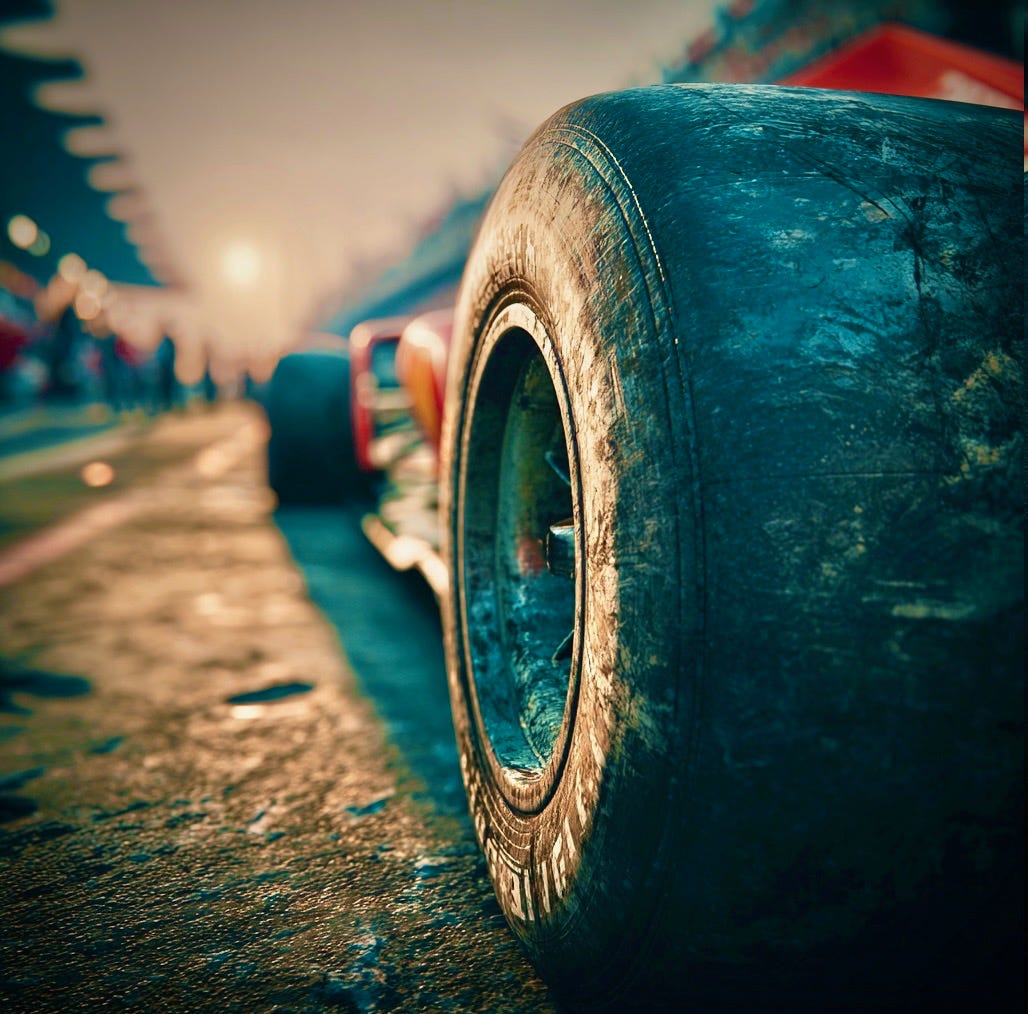
Soft things don’t break.
Rocks crack. Wood splinters. Metal bends. Given enough force, even diamonds shatter. Subject brittle things to enough stress and they fracture. Hard things may have high breaking points; they still suck at redistributing energy.
There’s a reason we don’t land thirty ton planes on wheels made of steel.
The Olmecs (not what they called themselves) of pre-Columbian Mesoamerica understood this. Thousands of years before European invasions, the people of Tamoanchan discovered certain trees had a natural defense system: their own blood. Cut the bark of a hevea brasiliensis tree, and they seep a thick, milky fluid which clots, sealing the wound. Indigenous tribes used this sap to make waterproof shoes and clothes, and balls that bounced.
When conquistadors rolled up to South America in the 1600s they didn’t see “tree immune system.” They saw: magic stretchy stuff.
English chemist Joseph Priestley is credited for coining the word “rubber” when he realized this substance could erase pencil marks. Raw rubber however, is a mess. It’s sticky. It stinks. It’s temperature sensitive; tacky when hot, brittle when cold.
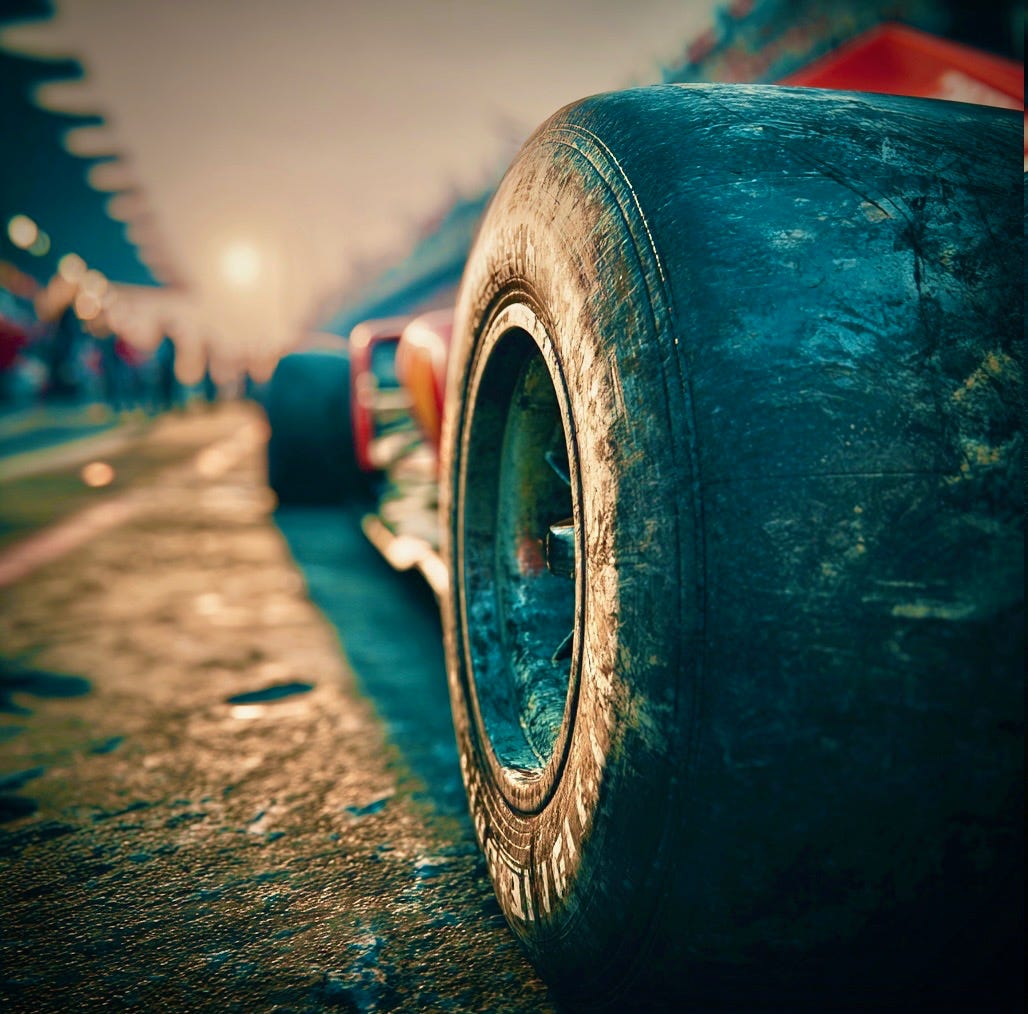
So how do we get from tree blood to 230 mph at the Monaco Grand Prix?
1832 was a bad year for Charles Goodyear. Failing health and businesses reduced him to catching frogs and digging up half-frozen potatoes to survive. That’s right around the time he became obsessed with latex.
A self-taught chemist, he spent years broke and fixated, cooking rubber with anything he could think of—anything that might stabilize it. One day he accidentally dropped a rubber–sulfur mix on a hot stove and noticed it didn’t melt into goo. It charred yet stayed elastic.
Under the hood, what happened is simple and vicious:
Rubber is long chains of isoprene—flexible spaghetti. Heat it with sulfur and tiny bridges form between chains. Not everywhere, just enough that the strands can’t just slide past each other any way they want. Before vulcanization rubber flowed, smeared, sagged, froze.
After vulcanization it stretched and snapped back without losing itself.
Too few crosslinks? Still gummy. Too many crosslinks? It goes hard, like ebonite. The sweet spot is where it stays soft and strong at the same time. He patented this process in 1839, calling it vulcanization.
The “rubber boom” became a horror show. Colonization, forced labor, mutilation in the Congo and Amazon, entire communities brutalized to squeeze sap faster. Empire took a healing fluid and turned it into extraction. Today we walk on it, drive on it, land planes on it, water gardens through it.
The whole world rides on vulcanized softness.
A substance born as tree-bandage became the backbone of a brutal industrial age. Yet we enjoy the achievement without naming the cost. What 19th century industrialists never asked was: what does that feel like for the sap?
If you’re latex in the tree, life is simple. You sit in vessels under the bark, slightly pressurized, ready to clot. When the tree is wounded, you flow out, meet the air, thicken, seal.
Your whole purpose is local: close this cut; keep this being alive.
Then one day, someone mutilates you on purpose. They slash your home, repeatedly. You keep trying to heal your house, and you can’t seal fast enough to seal the wounds. They pour you into cups, separate you from your trunk, your canopy, your forest.
And then they boil you.
You get smoked in a kiln then rolled into sheets. Your proteins denature. You reek, you darken. Then someone grinds you up with sulfur, shoves you into a mold, and bakes you. From the sap’s point of view, it’s not: “Ah yes, I am achieving my true potential.” It’s more like:
“I didn’t ask to become this thing where survival meant being forever changed.”
You go into the flame as something that can only tend small wounds. You come out as something that can carry civilizations on its back. You become something remarkable, at great personal expense. You lose your free-flowing softness.
You gain a new kind of softness that doesn’t fall apart under load.
If 2025 felt like you brought softness to a world that was ablaze? Hard same. 2025 tried to break me. If you feel like a tree that got tapped and drained of its natural defenses? You had choices. You could’ve dried up. Become brittle. Said: “fuck this, fuck everybody, I’m done.” That’s valid. It’s one form of survival. Lots of pretty, hard things look impressive in the right light.
Or, you could choose to let yourself be purified in fire.
The latter has consequences. Fire burns. You feel it. You don’t get to go numb. You don’t deny it hurts. You keep loving. Keep asking ugly questions. You let the pressure and the sulfurous parts—the shame, the fear, the anger—actually bond into you instead of leak out sideways. If you took everything the world threw at you and chose to move from a place of healing? If you metabolized all those contradictions without collapsing? You didn’t just survive.
You gained vulcanized clarity.
Diamond shatters if you hit it wrong. Rubber laughs, says “do it again.” 2025 hit harder than any other year of my adult life. Previous versions of me would have broken. I didn’t survive because I was hard. I chose to pay the price of staying soft. I let heat transform me into someone that could flex without tearing.
I was tough before. Now, I’m unbreakable.
Vulcanization is what happens when self-healing stops being a one-off event and becomes a field condition. Becoming unbreakable isn’t about how hard you can get hit and keep going. Soft things don’t break; they bend, deform, reform and keep going. If you can survive the process of becoming soft and strong?
You’ve gained the ability to absorb and disperse force without losing coherence.
“The sweet spot is where it stays hard & soft at the same time.” Wooooow. You get me. You really get me.
Wow, what a fabulous metaphor. I understand why you MUST write. ALWAYS.
May we all embrace the vulcanization process. It's not done yet (is it ever?)... but yes, I also feel unbreakable in ways I never would have imagined I could.
Now to test it out 'where the rubber meets the road'.